
Root Canal Treatment in Sonipat: What Actually Happens (And Why the Fear Is Outdated)
18 July 2026
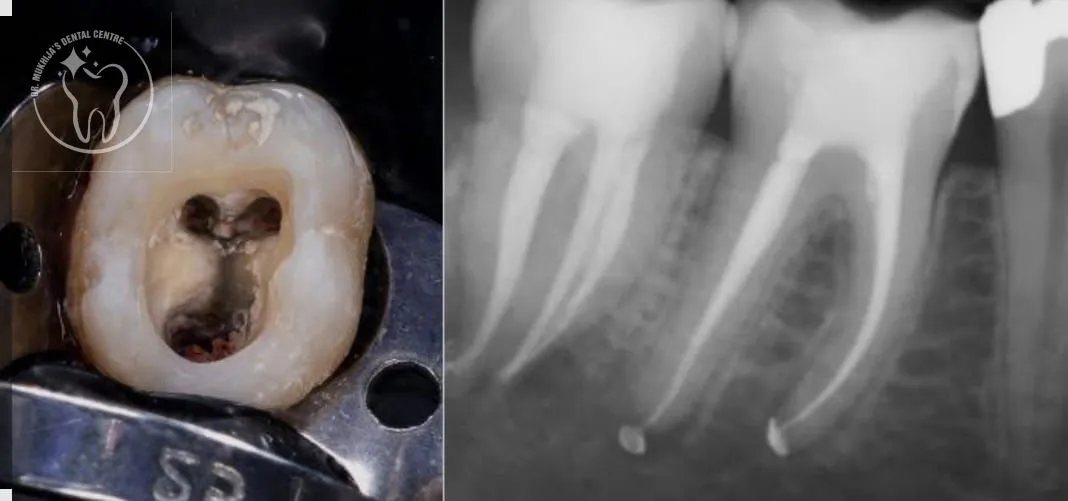
Say "root canal" to most people and you'll watch them wince. It's become shorthand for the worst possible dental experience, even though — and I mean this seriously — modern root canal treatment is nowhere near as bad as its reputation. The dread usually comes from outdated stories, not current reality.
If you're dealing with a toothache right now and searching for "root canal cost Sonipat" or "painless RCT near me," let's actually walk through what's happening in your mouth, what treatment involves, and why the fear is mostly outdated.
What's Actually Happening When You Need a Root Canal
Inside every tooth, beneath the enamel and dentin, there's a soft core called the pulp — nerves, blood vessels, connective tissue. When deep decay, a crack, or repeated dental procedures let bacteria reach that pulp, it gets infected or inflamed. That's what causes the sharp, throbbing pain that gets worse with hot or cold, or sometimes just a dull ache that won't quit.
Left untreated, the infection doesn't just sit there — it can spread to the bone around the root, form an abscess, and eventually you risk losing the tooth entirely. A root canal removes that infected pulp, cleans and shapes the inside of the tooth, and seals it — saving the natural tooth instead of extracting it.
Why People Fear It (And Why That Fear Is Mostly Outdated)
The reputation root canals have comes largely from decades-old dentistry, before modern anesthesia and rotary instruments became standard. Back then, procedures took longer, anesthesia wasn't always as effective, and the tools were far less precise.
Today, especially with modern root canal systems — which let the dentist clean and shape the internal canal structure of the tooth with real precision — the whole procedure is more accurate and considerably more comfortable. You're numb throughout, and most of what you feel is pressure and vibration, not pain. The actual "painful" part most people remember is the toothache that got them into the chair in the first place, not the treatment itself.
Single Sitting RCT: What It Means and Who It's For
One thing patients ask about a lot is single-sitting root canal treatment — finishing the whole procedure in one visit instead of two or three spread over weeks.
It's absolutely possible for a lot of cases, particularly when there's no active infection or abscess complicating things, and when the tooth's canal anatomy is straightforward enough to clean and seal fully in one go. The advantage is obvious: less time off work, one round of numbing instead of several, and no risk of forgetting a follow-up appointment.
That said, not every case qualifies for single sitting. If there's a significant abscess, complex canal anatomy, or the tooth needs medication to settle an infection first, a multi-visit approach is actually the safer, more predictable route — rushing it in those cases can lead to treatment failure. A dentist who insists on single-sitting for every single case, regardless of what the X-ray shows, isn't necessarily doing you a favor.
Root Canal Cost in Sonipat: What Affects the Price
Root canal cost in India, and specifically in Sonipat, tends to depend on a few real variables:
- Which tooth is involved. Front teeth generally have a single canal and are simpler to treat. Molars can have three or four canals, which takes more time and skill.
- Whether it's single or multiple sittings. More visits generally means a different fee structure.
- The final restoration. A root canal-treated tooth, especially a molar, usually needs a crown afterward to protect it from cracking under chewing pressure. This is often quoted separately from the RCT itself, and skipping it is a common mistake that leads to the tooth fracturing later.
- The technology used. Clinics using modern root canal systems for precision work sometimes have a different cost structure, but the improved accuracy is usually worth it, especially for molars with complex canal systems.
When you're comparing root canal cost in Sonipat between clinics, always ask whether the quote includes the crown, and whether it's single or multi-visit — apples-to-apples comparisons matter more than the sticker price alone.
A Patient Story: Why Waiting Makes It Worse
We had a patient come in from Sector 15 who'd been managing tooth pain with painkillers for almost two months, hoping it would just go away. By the time she came in, what could've been a relatively straightforward single-sitting RCT had turned into a case with a visible abscess and swelling. We had to treat the infection first with medication inside the tooth over a couple of visits before we could properly clean, shape, and seal the canal.
She healed completely and kept her natural tooth — which was the goal — but it took three visits instead of one, purely acting on tooth pain early. The lesson we always share with patients: the earlier you address tooth pain, the simpler, faster, and often more affordable the treatment turns out to be.
What a Painless Root Canal Visit Actually Looks Like at Our Clinic
- Diagnosis first. A dental X-ray to see the extent of decay or infection and understand the canal anatomy — this is non-negotiable for accurate treatment.
- Proper anesthesia. You shouldn't feel sharp pain at any point. If you do, tell your dentist immediately — more anesthetic can and should be given.
- Careful cleaning and shaping of the canal system, using rotary instruments and, where needed, magnification for precision.
- Sealing the canal with a biocompatible material to prevent reinfection.
- A crown or filling to restore the tooth's strength, especially important for back teeth that take on heavy chewing force.
- A follow-up check to confirm healing, particularly if there was an infection beforehand.
If you're searching for a painless root canal in Sonipat, the honest answer is that a well-numbed, carefully performed RCT shouldn't hurt. The sooner you come in, the simpler it tends to be.
Book Your Visit
Fill out the form below and we will contact you immediately.
FAQ
Frequently Asked Questions
01How do I know if I need a root canal versus just a filling?
If decay has reached the nerve — signs include lingering sensitivity to hot/cold, spontaneous pain, or pain when biting down — a filling alone won't resolve it. Only a dental X-ray and clinical exam can confirm this properly.
02Is a root canal painful?
No. Under local anesthesia, the procedure itself is generally comfortable. Most of what you feel is pressure and vibration, not pain.
03How long does a root canal take?
A straightforward single-sitting RCT can often be done in around an hour, while more complex cases may need two or three visits spread over a couple of weeks.
04Why do I need a crown after a root canal?
After a root canal the tooth is more brittle and can crack under chewing pressure. A crown protects it, especially for back teeth that take a lot of force.
05Can a root canal tooth last a lifetime?
With a proper crown and good oral hygiene, a root canal-treated tooth can last for many years, often as long as any other tooth.